Sinterklaas at Night
A Warm, Handcrafted First Impression for Small Business Branding
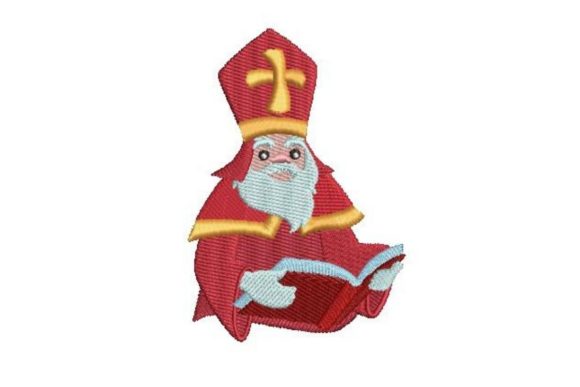
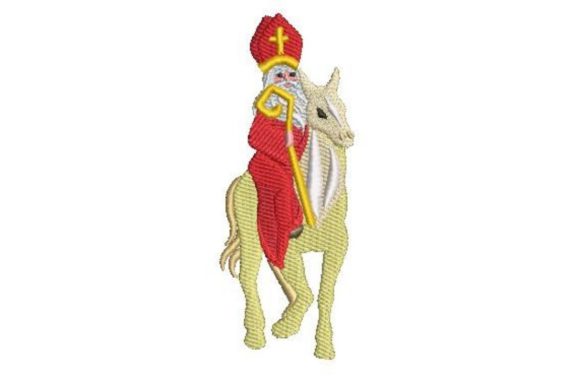
As an embroidery designer who’s developed hundreds of commercial designs for cafés, boutiques, bakeries, and handmade studios, my first impression of Sinterklaas at Night is immediate and reassuring: it reads as friendly, calm, and quietly confident—not overly festive, not cartoonish, but warmly human. The title evokes tradition and quiet magic; the description—“this cute embroidery will bring happiness and calm to your soul”—tells me this isn’t just holiday decor. It’s a mood, a tone, a brand-aligned emotional cue. For small businesses leaning into authenticity, craftsmanship, and seasonal storytelling, Sinterklaas at Night lands as classic yet approachable—neither rustic nor ultra-modern, but gently timeless. That balance makes it unusually versatile across merchandise categories.
Where Sinterklaas at Night Shines in Real Business Use
This machine embroidery design excels where personality meets practicality. On embroidered patches—especially 2.5"–3.5" woven or chenille-style versions—it holds detail without visual clutter, making it ideal for boutique gift tags, staff lapel accents, or product packaging seals. As an apron embroidery motif for a florist or bakery, its soft scale and gentle contours integrate beautifully with natural fabrics like cotton duck or linen blends. For cap embroidery on structured front panels, it reads clearly at 2.75" wide—no distortion, no lost outlines—especially when paired with a clean under-arch or subtle border stitch.
On tote bag design, Sinterklaas at Night works best centered low on the front or subtly repeated along a side seam—its quiet charm avoids overwhelming the canvas while still anchoring brand identity. For custom apparel like staff work shirts or pet brand bandanas, it functions equally well as a chest logo accent or sleeve detail: compact enough to respect garment real estate, expressive enough to spark recognition. And for Etsy sellers or handmade product labels, it adds tactile warmth to packaging—think stitched-on fabric tags or branded ribbon ends—reinforcing the handmade product ethos without shouting.
Use With Care: Design Boundaries for Professional Results
Like any thoughtful embroidery file, Sinterklaas at Night has smart limits. Avoid shrinking it below 1.75" for embroidered patch use—fine details (like facial features or subtle star outlines) may collapse or stitch poorly on curved surfaces like cap crowns or knit totes. On dark uniforms or textured fabric—think heavy twill or bouclé wool—confirm thread colors deliver enough contrast; test stitching in black and white first to assess value separation. High stitch density areas (if present in the original file) demand careful stabilizer selection: lightweight cutaway for stable wovens, tear-away for smooth knits, and fusible + cutaway for stretchy or unstable bases.
Also verify hoop size compatibility before batch production. If your embroidery file requires a 5x7" hoop minimum, it won’t fit standard cap frames without re-digitizing—and that affects turnaround time and cost. Always test on real fabric, not just simulation software. A printable mockup helps clients visualize placement and scale—but nothing replaces stitching a physical sample on the exact material you’ll use in final production.
How Sinterklaas at Night Strengthens Your Brand Identity
For small business merch, consistency isn’t just about color palettes—it’s about emotional resonance. Sinterklaas at Night supports brand identity by offering warmth without kitsch, tradition without stiffness. When customers see it on a café apron, a florist’s tote, or a local pet brand’s collar tag, they register care, continuity, and intention—not generic holiday filler. That builds trust. It signals professionalism because it avoids over-decoration; the design breathes, leaving room for your brand voice to speak alongside it.
Visually, it elevates perceived product value: a hand-stitched or high-quality embroidered patch feels more premium than a printed label. On customer gifts or event merch, it deepens engagement—people remember how something made them *feel*, and “happiness and calm” are rare, memorable notes in crowded seasonal markets. And when aligned with other design assets—your logo, typography, packaging—it creates visual harmony rather than competition, especially if used as a secondary motif or seasonal variant.
Practical Designer Notes Before You Stitch
- Test in monochrome first—verify clarity and contrast before committing to full thread palette.
- Check small patch viability—stitch a 2" version on your target fabric to assess legibility and density.
- Review thread color contrast, especially for dark or busy backgrounds—light gold, cream, or soft charcoal often outperform pure white.
- Inspect spacing and underlay—tight corners or overlapping elements need clean under-stitching to prevent puckering.
- Confirm hoop size and format compatibility—this machine embroidery design comes with multiple embroidery file formats, but ensure your machine reads them natively.
- Use proper stabilizer—match weight and type to fabric texture and stitch density.
- Create a physical mockup for client approval—digital previews rarely capture drape, sheen, or tactile nuance.
- Compare beside existing design assets—does it complement your logo? Does it scale consistently with other seasonal motifs?
- Confirm commercial licensing before using in paid products—this digital embroidery file is intended for commercial embroidery, but always verify terms directly with the source.
Final Thought: A Seasonal Asset That Feels Like Home
Sinterklaas at Night isn’t just another Holidays embroidery file—it’s a quiet invitation to connect. For small business owners building community through tangible, thoughtful merch, it delivers brand-aligned warmth without sacrificing polish. Whether stitched onto a barista’s apron, a florist’s reusable tote, or a local bakery’s limited-edition gift box, it reinforces what your customers already love about you: authenticity, care, and a sense of place. Used intentionally—with attention to fabric, scale, and context—it becomes more than decoration. It becomes part of your story.