Sunflower Pumpkin Embroidery Design Review
First Impression: Warm, Whimsical, and Professionally Balanced
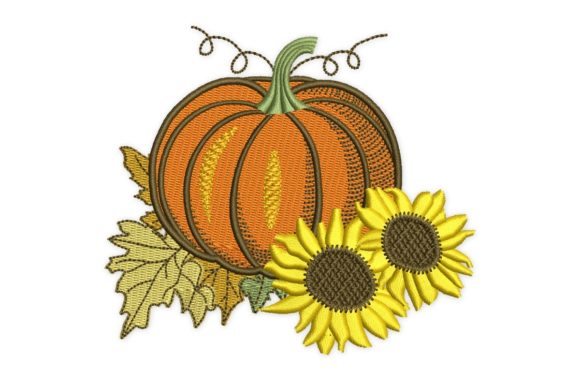
As an embroidery designer who’s developed hundreds of commercial designs for small businesses—from artisanal bakeries to pet boutiques—I immediately recognized Sunflower Pumpkin as more than just a seasonal motif. The title alone evokes cheerful contrast: sunflowers suggest brightness, growth, and handmade charm; pumpkins anchor it in autumn warmth and approachability. Combined, they signal friendliness without sacrificing elegance—exactly the tone small business owners need when building brand identity through custom apparel and embroidered patches.
Real-World Business Applications That Shine
Sunflower Pumpkin performs exceptionally well across high-visibility merchandise categories. On staff aprons and café uniforms, its balanced proportions read clearly at chest level—even from six feet away—making it ideal for front-panel branding. When digitized as an embroidered patch, the design holds integrity at 2.5”–3.5” sizes, with clean petal outlines and a pumpkin silhouette that avoids excessive stitch density. That’s critical: lower density means better drape on tote bags and less risk of puckering on lightweight cotton blends used in boutique merchandise.
For cap embroidery, the design works best centered on the front panel or subtly on the side gusset—its organic shape softens rigid headwear lines without overwhelming the structure. As a sleeve detail on work shirts or a focal point on reusable tote bags, Sunflower Pumpkin adds visual interest while reinforcing seasonal authenticity. Florists and local farms use it effectively on product packaging accents—think stitched tags on gift boxes or branded burlap sacks—enhancing perceived value of handmade products.
Etsy sellers and craft-based brands benefit especially: the design reads as both handcrafted and professionally refined, supporting customer trust. When paired with neutral thread colors (like olive green, burnt orange, or cream), it feels cohesive across multiple items—uniforms, aprons, caps, and tote bag designs—strengthening visual consistency without requiring full logo redesign.
Where to Use Sunflower Pumpkin Thoughtfully
While versatile, Sunflower Pumpkin requires mindful placement. Avoid scaling it below 2” for embroidered patches—petal details may blur or lose definition, especially on textured fabric like twill or fleece. Cap fronts with steep curvature demand careful digitizing adjustments; always test stitch on a curved cap blank before production. Dark uniforms (navy, charcoal, black) require high-contrast thread colors—avoid light yellows or pale oranges unless backed with underlay stitching and proper stabilizer.
High stitch density isn’t listed in the description, but given the layered floral-and-gourd composition, verify actual density before applying to delicate fabrics like linen or rayon blends. Frequent washing—common for aprons and staff uniforms—means stabilizer selection is non-negotiable: use cutaway for stability on stretchy knits, tear-away for stable wovens. And never skip testing on your *actual* production fabric: what looks crisp on polyester poplin may shift on organic cotton duck.
How It Strengthens Brand Identity and Customer Connection
Small businesses thrive on relatable authenticity—and Sunflower Pumpkin delivers that visually. It’s not generic Thanksgiving clip art; it’s a machine embroidery design with personality. Customers associate its warmth with care, craftsmanship, and seasonal intentionality—traits that elevate perceived product value. A bakery using it on aprons and takeout totes signals attention to detail; a florist stitching it onto reusable sleeves builds recognition without shouting “sale.”
That subtlety fosters repeat engagement: shoppers remember the sunflower’s tilt, the pumpkin’s gentle curve—not because it’s flashy, but because it feels *human*. In digital spaces, pairing a printable mockup of Sunflower Pumpkin on a tote bag or cap helps clients visualize real-world impact faster than abstract design assets alone. That speeds approvals, reduces revision rounds, and positions you—as the embroiderer or designer—as a strategic partner, not just a vendor.
Practical Designer Notes Before You Stitch
- Always test in black and white first—it reveals spacing issues, overlapping elements, and legibility gaps invisible in color previews.
- Check minimum viable size: stitch a 2” version on scrap fabric to confirm petal separation and pumpkin contour clarity.
- Review thread color contrast against your target garment—especially for dark or heathered fabrics.
- Inspect spacing between sunflower petals and pumpkin stem; tight gaps can fill in during stitching if density is high.
- Confirm hoop size compatibility with your primary machines—some multi-position layouts may exceed standard 5x7” hoops.
- Test on real fabric with correct stabilizer—not just on paper or screen. Fabric texture changes everything.
- Create a client-facing printable mockup before final approval—this prevents costly rework and builds confidence in your commercial embroidery process.
- Compare Sunflower Pumpkin beside existing design assets (logos, fonts, other embroidery files) to ensure visual harmony across touchpoints.
- Verify commercial licensing before using in client projects—many digital embroidery file marketplaces restrict resale or mass production without explicit permission.
Final Thoughts for Small Business Merch and Beyond
Sunflower Pumpkin isn’t just another Thanksgiving embroidery file—it’s a flexible, emotionally resonant asset for small business merch, custom apparel, and branded product storytelling. Its strength lies in duality: playful enough for a pet brand’s holiday bandana, elegant enough for a boutique’s limited-edition tote bag design. When executed with attention to thread choice, stabilizer, and real-fabric testing, it elevates every finished product—not just as decoration, but as intentional brand expression. For embroidery shops, Etsy sellers, and creative studios, this machine embroidery design earns its place in the core collection—not as a novelty, but as a quietly powerful tool for connection, consistency, and craft-led commerce.