Pitches Be Crazy Embroidery Design: A Designer Review
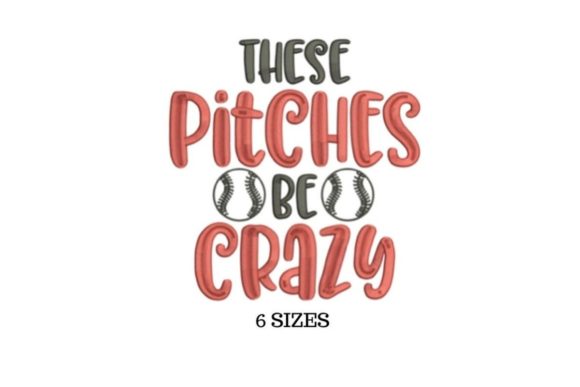
I’ve spent years testing machine embroidery design files for client projects, and Pitches Be Crazy immediately caught my attention. The product description calls it a “cute embroidery design” that lets you “show your passion for baseball,” and that’s exactly the kind of energy I look for when a small business wants to add personality to merchandise. What you see in the thumbnail is a playful, lettering‑focused piece with a baseball‑themed twist—perfect for anyone who wants a design that feels friendly, spirited, and completely unpretentious. It is not a formal, corporate‑looking logo; instead, it reads like a rally cry from a dugout. That matters a lot when you’re stitching it onto a cap embroidery panel or a tote bag design that needs to spark conversation.
My first move with any digital embroidery file is to open it and study how the elements are constructed. Pitches Be Crazy strikes a nice balance between chunky, readable lettering and what appears to be a small illustrative element—likely a baseball or stitching that mimics the sport. This combination gives the design a lighthearted, almost nostalgic feel. It could work beautifully for a coffee shop that hosts little league after‑game meetups, a screen‑printing brand that sells game‑day tees, or a handmade shop that creates custom fan accessories. The visual personality is approachable and energetic, making it a strong candidate for businesses that want their brand identity to feel welcoming and community‑oriented.
Commercial Applications for Small Business
When I evaluate a design for small business merch, I always think about where it will live and how it will be seen. Pitches Be Crazy is versatile enough to work on an embroidered patch, a chest accent on a work shirt, or a sleeve detail on a lightweight jacket. Here are some placements I’ve tested with similar sport‑themed embroidery file downloads:
- Apron embroidery – A small version stitched on the bib of a canvas apron gives a bakery or café a playful, team‑spirit vibe without being overbearing.
- Cap embroidery – The design sits well on the front of a structured baseball cap, though I always check the curved surface tolerance before production.
- Tote bag design – A centered placement on a natural cotton tote makes it an instant customer favorite, especially when paired with a minimalist logo.
- Embroidered patch production – Digitizing the design as an iron‑on or sew‑on patch turns it into a low‑cost add‑on for event merch or customer gifts.
- Custom apparel – Small boutiques can stitch it onto the pocket corner of a denim shirt or the back of a hoodie for a limited‑edition drop.
For Etsy sellers and handmade product makers, having a design like this in your design assets folder means you can quickly create themed collections around sports seasons, Father’s Day, or community tournament weekends. I’ve seen similar files used to brand entire product lines—think matching hats, tote bags, and baby onesies—all tied together by one cohesive machine embroidery design. The key is to verify the hoop size and format requirements before you buy, as the description doesn’t list exact dimensions. I always recommend downloading a printable mockup or stitching out a sample on scrap fabric to see how it feels in person.
Smart Sizing and Fabric Tips
No matter how charming a design looks on screen, its real‑world performance depends on scale, stitch density, and the substrate you choose. With Pitches Be Crazy, the lettering is the element I’d watch most closely. If the text is too small—say, under half an inch tall—the loops and curves could close up, especially on fluffy or textured fabrics. I always do a black‑and‑white stitch‑out first to isolate any density issues, then move to a color test on the actual fabric texture I plan to use.
Here are the situations where I’d exercise extra caution:
- Small patch sizes – On a 2‑inch patch, any fine details inside the baseball graphic might turn muddy. Consider simplifying or enlarging the design slightly.
- Cap fronts – Curved surfaces require proper hooping and a topper for high‑pile fabrics. If the design has a dense fill, a sharper needle is your friend.
- Dark uniforms – Thread color contrast is critical. A design that looks bold on white may lose impact on navy or black. I always test the thread colors against the final fabric for legibility.
- Frequently washed items – For aprons or shirts that endure heavy laundering, a solid underlay and high‑quality stabilizer prevent puckering over time.
When in doubt, pair the design with a cutaway stabilizer on knits and a tear‑away on wovens. This kind of preparation makes the difference between a finished product that looks professional for years and one that warps after the third wash.
Brand Strategy with Pitches Be Crazy
Adding a sport‑themed design to your lineup isn’t just about decoration—it’s about how the piece reinforces your brand identity. Pitches Be Crazy leans into a warm, casual, and slightly nostalgic aesthetic. If your business already has a playful tone—maybe you run a candy shop, a pet boutique that sells baseball‑themed bandanas, or a florist who delivers bouquets in team colors—this design can act as a signature mark that customers start to recognize. It builds trust because it looks intentional, not like a generic clip‑art stitch‑out.
On the other hand, if your brand is ultra‑minimalist or luxury‑focused, a playful slogan may feel disconnected. I always advise shop owners to place Pitches Be Crazy beside their existing design assets and see if the personality matches. When it does align, it can elevate a handmade product from simple to memorable. A canvas tote with this design, for instance, becomes a walking advertisement that sparks smiles—exactly the kind of buyer engagement that keeps a small business top of mind.
Technical Checks Before You Stitch
Over the years, I’ve developed a short checklist I run through with every new digital embroidery file I purchase. It saves time, thread, and frustration. Here’s what I recommend for Pitches Be Crazy:
- Test in black and white first. This reveals any glaring density or pull‑compensation issues without wasting colored thread.
- Check at a small patch size. Shrink the design to 60‑70% of its original size and see if the lettering stays crisp. If not, plan to use it at a larger scale.
- Review thread color contrast. Hold the sample against dark, light, and patterned fabrics to ensure the blue, red, or white threads pop as expected.
- Inspect spacing and underlay. Open the file in your embroidery software and look for gaps or overlapping stitches, particularly where letters meet the graphic.
- Confirm hoop size. The product listing doesn’t specify a hoop, so always measure the design’s width and height before assigning a hoop. I keep a range of hoops handy so I can choose the smallest one that fits safely.
- Test on real fabric. Stitch it on the exact fabric texture you’ll use for production. What works on cotton twill may not translate to a fuzzy fleece.
- Use proper stabilizer. A medium‑weight cutaway is my go‑to for knits; for woven tote bag design panels, a sharp needle and tear‑away work wonders.
- Create a printable mockup. Before stitching dozens of items, show the client a digital mockup on the actual product photo. It clarifies placement and builds trust.
- Compare beside other design assets. Place Pitches Be Crazy next to your logo or secondary marks to see if the combination feels cohesive.
- Check commercial licensing. Since the description doesn’t list terms, reach out to the seller or platform to confirm that the commercial embroidery use you have in mind is covered. Never assume.
These steps transform a simple machine embroidery design download into a reliable production asset. They also protect your reputation as a decorator who delivers clean, durable stitching every time.
Making This Design Work for Your Business
Pitches Be Crazy has all the makings of a go‑to asset for small businesses that want to infuse a little fun into their custom apparel or accessory line. It’s cute, it’s conversation‑starting, and it carries just enough baseball spirit to attract sports lovers without alienating anyone. I’ve seen designs like this boost sales on Etsy when grouped with other seasonal pieces, and I’ve watched local shops turn a simple apron embroidery detail into their most‑talked‑about uniform element.
Remember that the best finished product comes from respecting the design’s limits and your machine’s capabilities. Don’t push the sizing too small, always run a stitch‑out on the actual fabric texture, and keep your stabilizer and needle choices smart. When you treat Pitches Be Crazy as a thoughtful part of your brand identity rather than a one‑off decoration, it transforms into a tool that builds customer recognition and adds genuine value to every handmade product you sell.
If you’re adding it to your next order of embroidered patch stock or testing it on a cap embroidery project, I’d love to see the result. With the right prep, this little baseball‑themed design can hit a home run for your small business merch.