Pig Embroidery Design: A Maker’s Honest Review
First Look at the Pig Design
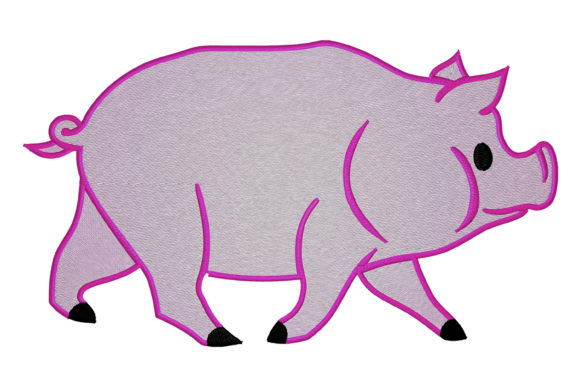
Opening a new machine embroidery design always carries a little anticipation, and the Pig design landed with a quiet, charming confidence. Right away, the shape tells a story — not overly cartoonish, not stiffly realistic, but that sweet spot where a farm animal becomes a character. The curves are gentle, the snout has just enough personality, and the overall silhouette reads clearly even at a glance. This is a design that feels intentional. It belongs in the farm animals category not because it’s a literal barn sketch, but because it captures the soft-natured side of rural life. For anyone who stitches products with a country, rustic, or handmade market vibe, Pig immediately feels like a dependable asset.
The detail level appears balanced: enough stitch definition to show a curly tail or a perked ear, but not so dense that you worry about puckering on a tea towel. I mentally placed it on a few different blanks as I studied the preview — a linen pillow cover, a baby romper, a canvas tote — and each time the design held its own without demanding a complicated thread palette. That versatility is exactly what I look for when I’m building a product line around embroidery designs.
A Real Project Test: Tote Bag for the Farmers Market
To put Pig through a practical thought exercise, I imagined a custom order I’d actually take on: a small batch of canvas tote bags for a local farm stand. The client wanted something friendly, instantly recognizable, and easy to pair with their hand-lettered logo. Pig was the obvious candidate. I hooped a medium-weight canvas with a cutaway stabilizer — nothing fancy, just what a typical home embroiderer or small shop owner would use — and selected a soft coral thread for the body with a charcoal outline. The goal was a design that felt hand-drawn but stitched with professional crispness.
As I walked through the mental stitch-out, I noted how the satin stitch borders would frame the pig’s shape on the textured canvas. The fill areas looked well-distributed, avoiding large satin patches that sometimes snag on tote bag fabric. Because the design didn’t appear to rely on tiny floating details, I wasn’t worried about registration shifts between color stops. For a project like this, where the finished tote might get folded, carried, and washed frequently, that durability matters. I could already picture customers at the farmers market smiling at the embroidered pig peeking out from under a bundle of fresh produce — exactly the kind of emotional hook that turns a $25 tote into a bestseller.
Where Pig Works Best in Everyday Products
If you’re wondering where this design fits into your embroidery project rotation, start with soft goods that welcome a touch of whimsy. Pig thrives on items that already carry a handmade or heirloom feel:
- Tote bags and market bags: The rounded shape nests perfectly on a front panel or corner accent.
- Sweatshirts and crewnecks: A left-chest placement gives Pig a boutique apparel look without overwhelming the garment.
- Pillow covers and cushion cases: The design scales nicely to center hoops, especially on linen or cotton-linen blends.
- Baby onesies and bibs: The soft personality works for nursery decor and personalized baby gifts — consider pastel thread palettes here.
- Kitchen towels and aprons: Pig feels at home in a farmhouse kitchen, especially when paired with a simple script name or date.
- Fabric patches: If you offer embroidered patches, this design can be stitched onto felt or twill and finished with a merrowed edge for a rustic accessory.
For each of these categories, the embroidery product holds its value visually. There’s no awkward stretching or distortion unless you drastically resize the file, so always confirm the native hoop size before scaling up or down.
When to Stitch with Extra Caution
No design is universally foolproof, and Pig has a few areas where a bit of care goes a long way. Small hoop sizes — like a 4x4 — can make some of the finer details shrink too much. If the pig’s eye or tail becomes a few sparse stitches on a smaller field, the charm fades. Test on your intended fabric scrap first. High-texture surfaces like terry cloth or waffle weave can break up the stitch flow, making the edges look fuzzy instead of crisp. On those, a water-soluble topper is your best friend.
Dark fabrics demand strong contrast. A pink pig stitched on black sweatshirt fleece without a light underlay thread can look muddy. I’d run a quick test with a white bobbin thread and adjust the top thread color brightness if needed. Stretchy garments — like super-soft jersey tees — also need a no-show mesh stabilizer and careful hooping to avoid registration drift. Caps and curved-bill hats present their own challenge: the pig’s rounded body might sit awkwardly on a curved surface unless you reposition the center point slightly higher than instinct suggests. Always do a cap stitch-out before committing to a bulk order.
Visual Appeal and Customer Perception
When a customer picks up an embroidered product featuring Pig, they’re not just seeing stitches — they’re reading a mood. A well-executed farm animal design communicates warmth, nostalgia, and a bit of humor. I’ve found that designs like this one increase perceived product value because they feel custom, even when they’re part of a repeating product line. For Etsy sellers and small shop owners, that translates directly into higher listing engagement. A sweatshirt with a generic floral might compete on price; the same sweatshirt with a personality-filled pig can stand out as the gift for a pig-lover, a farmhouse enthusiast, or a child’s birthday.
Buyer trust also rises when the embroidery looks consistent and intentional. If your Pig stitches out with clean outlines and even fill, it tells customers that your handmade products are crafted with care. Brand consistency becomes easier, too. You can use this design across multiple items — a cap, a pillow, a patch — and build a recognizable collection without losing the unique thread identity.
Designer’s Practical Checklist Before You Stitch
Before adding Pig to your active design library, here’s the pre-stitch checklist I run for every new machine embroidery design, especially one I plan to use in commercial embroidery or client projects:
- Test on scrap fabric. Use the same material and stabilizer you’ll use on the final product. Cotton, canvas, fleece — each behaves differently.
- Check thread color contrast. Preview the design with both light and dark thread combinations. A pig that looks great in soft peach on cream might vanish on oatmeal fabric.
- Evaluate stitch density. Watch for overly dense areas around the snout or hooves that could cause needle breaks on thicker layers. If the design feels stiff after stitching, you may need to adjust machine tension, not the file.
- Confirm your hoop size. What fits in a 5x7 hoop might be too tight in a 4x4. Open the embroidery file in your software and check the actual stitchable dimensions.
- Review small details in black-and-white mockups. If the design loses readability without color, thin lines or delicate curves might not print well on busy fabrics.
- Verify licensing terms. The product description mentions multiple embroidery file formats and broad compatibility, but always confirm that finished products can be sold commercially. For digital product sellers planning to use Pig in printable mockups or design assets, check whether the license covers digital display or only physical item sales.
- Stabilizer match. A cutaway for knits, tear-away for woven, and always a topper for textured surfaces. Pig’s smooth outlines deserve a stable foundation.
Because the product page doesn’t list exact stitch count, file formats, or hoop size specifics, I strongly recommend reaching out to the designer or reading the full description before downloading. Knowing those details ahead of time prevents re-hooping frustration and wasted thread.
Final Thoughts on Pig for Commercial Use
As part of the farm animals category, Pig brings a lot of retail-ready personality without being overly seasonal. It can anchor a spring collection, a baby shower lineup, or a farmhouse kitchen bundle. The embroidery quality — assuming the digitizing is as thoughtful as the preview suggests — gives you a design that’s cute enough for a child’s blanket but polished enough for an adult’s unisex crewneck. I see it working especially well for Etsy sellers who already carry rustic or pet-themed lines, or for craft fair tables where a few well-placed embroidered items stop shoppers in their tracks.
That friendly little pig, stitched in a soft thread set, doesn’t just decorate fabric. It makes the finished product feel like a handwritten note from the countryside. If you treat it with the same care you’d give any high-quality machine embroidery design — test thoroughly, choose your blank wisely, and honor the craft — Pig can easily become a quiet bestseller in your handmade product rotation.