Number 3 Cute Teddy: A Designer's Hands-On Review
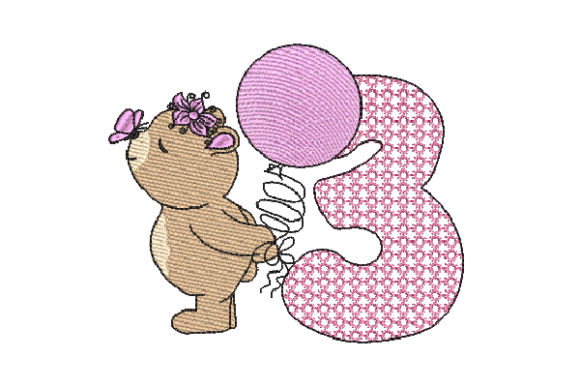
When I first opened the Number 3 Cute Teddy embroidery file, my immediate reaction was a genuine smile. This design isn’t trying to be perfectly polished; it’s aiming for a specific, charming mood. That hand-drawn sketch aesthetic, mentioned in the product description, is absolutely its strongest asset. It feels personal, approachable, and carries a warmth that more rigid, technical designs often lack. For anyone in the business of making personalized gifts or items with a heartfelt touch, this visual personality is a significant starting advantage.
The Kind of Projects This Teddy Naturally Belongs To
My mind went straight to a recent client request: a custom embroidered tote bag for a three-year-old’s birthday. The client wanted something playful but not cartoonish, something that felt special and handmade. This teddy design, centered around the number three, was an obvious contender. It’s more than just a birthday embroidery design; it’s a celebratory marker. I envisioned it stitched onto the front of a canvas tote, imagining the final product. The lightly filled, sketch-like quality means it won’t look overly heavy or industrial on a bag meant for little hands. It naturally extends to baby embroidery on blankets or a special sweatshirt, pillow covers for a nursery, or even a simple tea towel as a keepsake gift. Its appeal lies in its specificity—it’s for a third birthday—which makes it perfect for custom apparel and small shop merchandise targeting that occasion.
Performance on Real Fabrics and Products
Let’s talk about how this translates from a digital file to a finished product. The description highlights it’s quick to stitch with major impact, and that’s a crucial point for efficiency in a craft business. “Lightly filled with no or little underlay” suggests a lower stitch density. In practice, this means it should stitch out relatively fast, which is great for batch work if you’re preparing items for a craft fair or multiple Etsy listings. It also means the design is less likely to become overly stiff on lighter fabrics. On a sweatshirt or t-shirt, that’s a benefit—it maintains fabric flexibility.
However, that same lightness requires some practical forethought. On highly textured fabrics like some towels or certain weaves, the sketch lines might not achieve the same crispness. On dark fabric backgrounds, the choice of thread colors becomes paramount to maintain that hand-drawn clarity. For projects like caps or hats with curved surfaces, the design’s simple, open shapes should adapt well, but always with the right stabilizer. The lack of dense fill areas is a friend here, reducing puckering risks.
Where This Design Requires a More Careful Approach
My designer instinct notes a few scenarios where I’d proceed with caution. The charm of the design is in its lines. If you’re thinking of scaling it down to a very small hoop size for, say, a tiny embroidered patch on a baby garment, you must test first. Those sketch lines need space to breathe and be recognized. Shrinking them too much might turn them into a blur of stitches. Similarly, on thin or stretchy fabric without proper stabilization, the design could lose its defined shape.
This isn’t a design meant for dense decorative accents; it’s a focal point. Trying to combine it with other complex elements on a single product might clutter its sweet simplicity. For branding consistency in a boutique, it works best as a standalone, special-occasion motif rather than a repeated logo. Its value is in its event-specific celebration.
The Impact on Customer Perception and Product Value
From a commercial perspective, stitching this onto a product adds tangible value. That hand-drawn look directly communicates handmade presentation. For a customer buying a personalized gift, that perception is gold. It feels less like a generic, mass-produced image and more like a thoughtful creation. This builds customer trust and engagement. When I think of displaying it in a printable mockup for an online store, the aesthetic suggests care and craftsmanship, which can elevate a simple product listing.
For holiday embroidery or birthday gifts, its “cute” factor is immediately recognizable, which speeds up a buyer’s emotional connection. That’s a practical advantage for any creative entrepreneur. The design doesn’t require explanation; its intent is clear, making the finished product instantly giftable.
Practical Notes Before You Hoop Your Fabric
Before running this machine embroidery design on a client’s item or your own small shop product, here’s my routine checklist. First, always stitch it out on scrap fabric that matches your final project material. This is non-negotiable. You need to see how those sketch lines render on your specific canvas, cotton, or fleece.
Play with thread color contrast. Try it on both light and dark scraps to decide if you need a bold white or a soft pastel to achieve the desired impact. Inspect the small details after stitching—are the teddy’s features clear? Since the description doesn’t specify exact formats or licensing, you must confirm the embroidery file compatibility with your machine and, critically, check the license terms if you’re using it for commercial embroidery projects or selling the physical products. Never assume.
Consider the product’s life. If it’s going onto a child’s item that will need frequent washing, the lighter fill could be an asset, putting less stress on the fabric, but ensure your stitch quality and stabilization are robust to handle it.
Final Thoughts From the Worktable
The Number 3 Cute Teddy design is a specialized tool in your embroidery project toolkit. It’s not a universal logo; it’s a celebratory mark. Its strength is creating a specific, warm, and personal feeling on a finished item. For birthdays, particularly third birthdays, it’s a wonderfully fitting design asset. Its stitching efficiency and lightweight aesthetic make it a practical choice for apparel decorators and hobbyists alike. My advice is to embrace its niche. Use it where its personality shines—on that special tote, sweater, or blanket—and always do that quick test stitch. That’s how you ensure the adorable sketch on your screen becomes an even more adorable reality on your handmade product.